
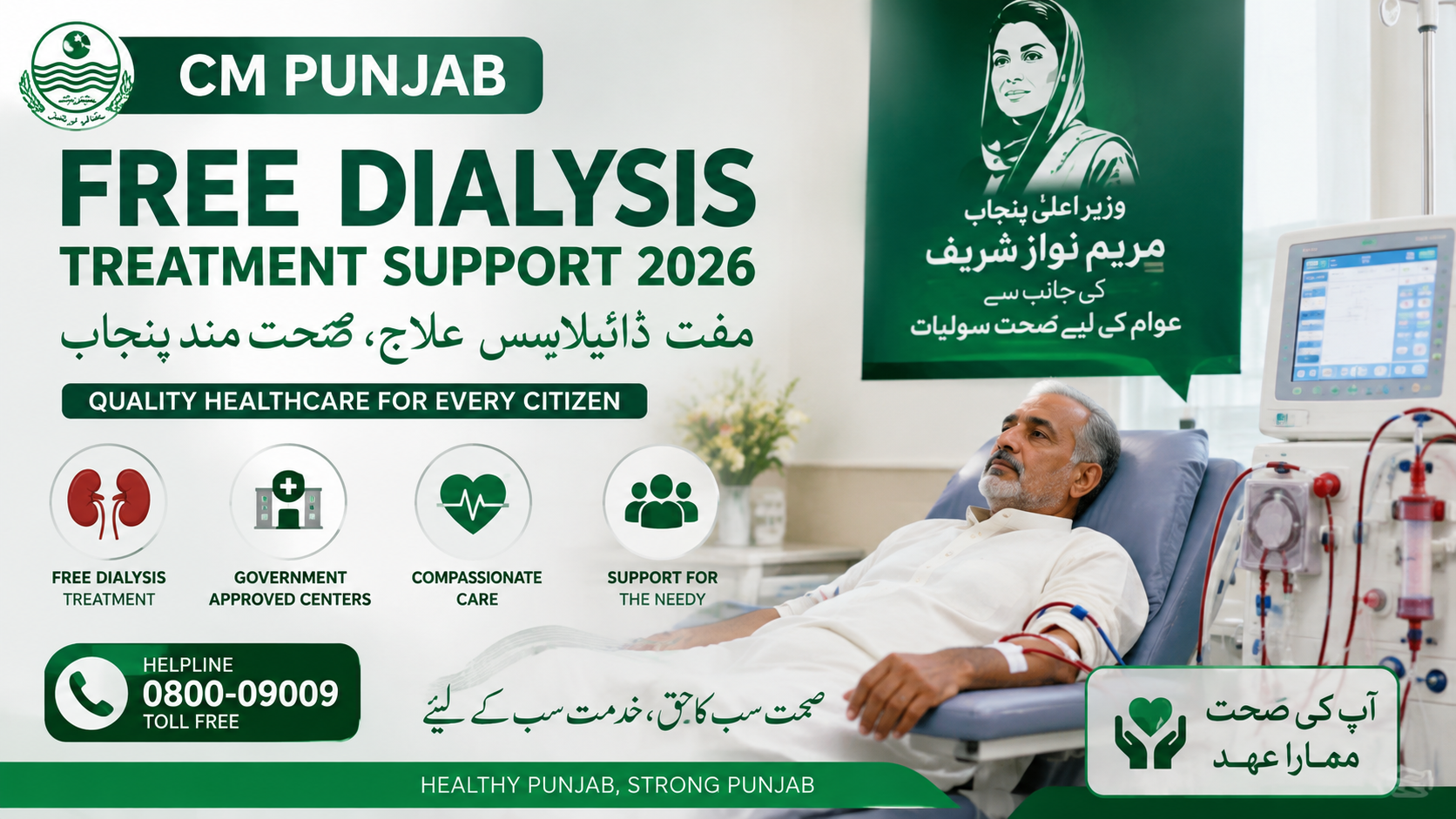
CM Punjab Free Dialysis Treatment Support 2026 — مکمل رہنمائی
السلام علیکم ناظرین!
آج کی ویڈیو میں ہم ایک انتہائی اہم health-support initiative کے بارے میں بات کریں گے، جس کا تعلق ایسے kidney patients سے ہے جنہیں باقاعدگی سے dialysis کی ضرورت ہوتی ہے۔
ہمارا موضوع ہے:
Click Here
CM Punjab Free Dialysis Treatment Support 2026
اگر آپ یا آپ کے خاندان میں کوئی ایسا مریض ہے جس کے kidneys صحیح طریقے سے کام نہیں کر رہے اور doctor نے dialysis کا مشورہ دیا ہے، تو یہ معلومات آپ کے لیے بہت اہم ہو سکتی ہیں۔
Punjab Government کے development documents میں Chief Minister’s Special Initiative for Dialysis Program شامل ہے۔ Official development information کے مطابق اس initiative کی estimated cost Rs. 3.639 billion درج کی گئی ہے۔
لیکن یہاں ایک بات شروع میں واضح کرنا بہت ضروری ہے۔
اس initiative کو یہ سمجھنا درست نہیں کہ پنجاب کا ہر kidney patient خود بخود ہر hospital میں unlimited free dialysis حاصل کر سکتا ہے۔ Patient کی eligibility، treatment facility، available services، funding mechanism اور applicable rules کو متعلقہ official hospital یا department سے verify کرنا ضروری ہے۔
آئیے step by step سمجھتے ہیں کہ dialysis کیا ہے، حکومت کی طرف سے support کا مقصد کیا ہے، deserving patients کہاں assistance حاصل کر سکتے ہیں، کون سے documents رکھنے چاہئیں، اور application یا treatment assistance کے لیے کیا طریقہ اختیار کیا جا سکتا ہے۔
Dialysis کیا ہے؟
Dialysis ایک medical treatment ہے جو ایسے patients میں استعمال ہوتی ہے جن کے kidneys جسم سے waste products اور اضافی fluid مناسب طریقے سے خارج نہیں کر پاتے۔
Hemodialysis میں ایک machine اور specialized filter کے ذریعے blood کو صاف کیا جاتا ہے۔
Punjab Specialized Healthcare Department کی documentation کے مطابق hemodialysis kidney failure میں blood سے waste products جیسے creatinine اور urea اور اضافی پانی کو remove کرنے کا طریقہ ہے۔
کچھ patients کو dialysis ہفتے میں کئی مرتبہ کروانے کی ضرورت پڑ سکتی ہے۔
یہ schedule patient کی medical condition اور nephrologist کی recommendation کے مطابق ہوتا ہے۔
اسی وجہ سے dialysis کا مسلسل خرچ کم آمدنی والے خاندانوں کے لیے ایک بڑا financial challenge بن سکتا ہے۔
CM Punjab Dialysis Initiative کیوں اہم ہے؟
Kidney failure کے patients کے علاج میں صرف ایک دفعہ hospital جانے سے مسئلہ حل نہیں ہوتا۔
بہت سے patients کو long-term dialysis، laboratory tests، medicines، doctor consultations اور دیگر supportive care کی ضرورت ہوتی ہے۔
اگر ایک خاندان کو مسلسل dialysis کا خرچ اپنی جیب سے برداشت کرنا پڑے تو household budget پر شدید اثر پڑ سکتا ہے۔
اسی background میں Punjab Government نے dialysis کے لیے ایک special initiative development program میں شامل کیا ہے۔
Official Punjab development document میں Chief Minister’s Special Initiative for Dialysis Program کو پنجاب کے لیے درج کیا گیا ہے۔
اس initiative کا بنیادی مقصد dialysis care کے لیے government support کو strengthen کرنا اور eligible patients کے treatment access کو بہتر بنانا ہے۔
کیا dialysis ہر patient کے لیے free ہے؟
یہ سب سے اہم سوال ہے۔
اس کا جواب یہ ہے کہ program کی applicable eligibility اور treatment rules کو verify کرنا ضروری ہے۔
صرف یہ کہ کسی شخص کو kidney disease ہے، اس بنیاد پر یہ assume نہیں کرنا چاہیے کہ ہر treatment، ہر medicine اور ہر private hospital کی ہر service automatically free ہوگی۔
Patient کو متعلقہ government hospital، dialysis center یا welfare desk سے پوچھنا چاہیے:
- کیا dialysis service available ہے؟
- کیا patient eligible ہے؟
- کون سی services cover ہوتی ہیں؟
- کون سے documents required ہیں؟
- کیا referral ضروری ہے؟
- dialysis schedule کیسے ملے گا؟
- کیا treatment کسی مخصوص center پر ہوگا؟
یہ verification بہت ضروری ہے۔
Dialysis کی ضرورت کیسے معلوم ہوتی ہے؟
Dialysis کا فیصلہ patient خود نہیں کرتا۔
عام طور پر kidney specialist یعنی nephrologist patient کی medical history، laboratory results، kidney function اور overall condition کو دیکھ کر treatment plan بناتا ہے۔
اگر doctor نے dialysis recommend کی ہے تو patient کو treatment delay نہیں کرنا چاہیے۔
Kidney disease میں blood tests، urine tests، imaging اور دوسرے medical assessments اہم ہو سکتے ہیں۔
ہر kidney patient کو dialysis کی ضرورت نہیں ہوتی۔
اسی لیے social media videos دیکھ کر خود سے dialysis شروع یا بند کرنا درست نہیں۔
Kidney Patients کے لیے اہم علامات
Kidney disease مختلف لوگوں میں مختلف انداز سے ظاہر ہو سکتی ہے۔
کچھ patients میں:
- جسم میں سوجن
- پیشاب میں تبدیلی
- غیر معمولی تھکن
- nausea
- appetite میں کمی
- blood pressure کے مسائل
- سانس میں دشواری
- urine output میں کمی
جیسے symptoms ہو سکتے ہیں۔
لیکن ان میں سے کوئی بھی symptom صرف kidney failure ثابت نہیں کرتا۔
اگر کسی شخص کو مسلسل یا شدید علامات ہوں تو qualified doctor سے medical assessment کروانا ضروری ہے۔
CM Punjab Free Dialysis Treatment Support 2026
Dialysis Assistance, Eligibility, Documents, Welfare Support & Patient Guide
This webpage is for general public information and awareness only. It is not an official Government of Punjab application portal.
Eligibility, participating facilities, treatment coverage and application procedures must be verified through the relevant official government department or authorized healthcare facility.
About CM Punjab Dialysis Treatment Support 2026
Dialysis is an important medical treatment for patients whose kidneys are unable to adequately remove waste products and excess fluid from the body.
Many patients require regular dialysis sessions over an extended period. The repeated cost of treatment, medicines, laboratory tests and transportation can create a serious financial burden for low-income families.
The Government of Punjab has included the Chief Minister’s Special Initiative for Dialysis Program in its development planning.
The official development document lists an estimated cost of Rs. 3.639 billion for the program.
Key Areas of Support
Dialysis Care
Support for eligible patients requiring regular dialysis treatment.
Healthcare Facilities
Patients should verify authorized hospitals and dialysis facilities.
Medical Support
Additional welfare mechanisms may assist deserving patients with medicines and treatment expenses.
What Is Dialysis?
Dialysis is a medical procedure used when the kidneys cannot adequately perform their normal filtering functions.
Hemodialysis uses a dialysis machine and a special filter to remove waste products and excess fluid from the patient’s blood.
The number and frequency of dialysis sessions depend on the patient’s medical condition and the treatment plan prescribed by a qualified nephrologist.
Who May Be Eligible?
Eligibility for government-supported dialysis services depends on the applicable program rules, patient verification and availability of services.
- Patients diagnosed with kidney failure who require dialysis may be considered according to program rules.
- Patients should complete the required medical and identity verification.
- Treatment may need to be received through an authorized or designated facility.
- Deserving patients may also explore available welfare mechanisms.
A kidney disease diagnosis does not automatically guarantee every government benefit. Always confirm eligibility and treatment coverage with the authorized facility.
Required Documents
- Original CNIC
- CNIC copy
- Nephrologist report
- Doctor’s prescription
- Kidney function laboratory reports
- Previous dialysis records
- Hospital medical record
- Referral letter, if required
- Passport-size photographs, if required
- Financial hardship documents, if required
Zakat Medical Treatment Assistance
Punjab Zakat & Ushr Department provides a mechanism for deserving patients who need assistance with medical treatment.
According to the department, deserving patients can obtain an Istehqaq Certificate through the relevant Local Zakat & Ushr Committee and submit it to the Health Welfare Committee of the concerned hospital, subject to the applicable rules and availability.
Zakat treatment assistance is not simply a cash payment made directly to the patient.
Medical Social Services Units
The Punjab Social Welfare Department has established Medical Social Services Units in hospitals across Punjab.
These units are intended to assist needy and destitute patients with medicines and treatment expenses through applicable welfare mechanisms.
Patients facing financial hardship should ask their hospital about the Medical Social Services Unit or Medical Social Officer.
Patient Welfare Society
Some hospitals also have Patient Welfare Societies that arrange support for needy patients through philanthropists and other available resources.
Patients can ask the hospital welfare desk whether such assistance is available for their case.
Step-by-Step Guide
Get a proper medical assessment and confirm whether dialysis is required.
Collect prescriptions, laboratory reports, previous dialysis records and other medical documents.
Ask the relevant government hospital or authorized dialysis facility about available support.
Complete the applicable patient and identity verification process.
If you cannot afford treatment, ask about Medical Social Services, Zakat or hospital welfare mechanisms.
Continue dialysis according to the schedule prescribed by the treating medical team.
Diet and Fluid Management
Dialysis patients may need specific dietary and fluid restrictions depending on their kidney function, laboratory results and overall medical condition.
Do not follow a generic internet diet plan without consulting your nephrologist or renal dietitian.
Do not pay unknown agents who promise a government dialysis card, guaranteed cash payment or guaranteed treatment in exchange for a fee.
Always verify the information through an official government department or authorized healthcare facility.
Protect Your Personal Information
Never share sensitive financial information with unknown people or suspicious websites.
- ATM PIN
- Bank password
- OTP code
- Mobile wallet PIN
- Debit or credit card CVV
- Online banking login information
When to Seek Emergency Medical Care
Dialysis patients should seek immediate medical attention if they experience serious symptoms such as severe breathing difficulty, chest pain, fainting, severe bleeding or other medical emergencies.
Government assistance information should never delay emergency medical treatment.
Frequently Asked Questions
Is dialysis free for every patient in Punjab?
Not automatically. Eligibility, treatment coverage, facility authorization and applicable rules must be verified for each patient.
What is the CM Punjab Dialysis Program?
The Chief Minister’s Special Initiative for Dialysis Program is included in Punjab Government development planning to support dialysis-related healthcare.
Can poor patients seek Zakat assistance?
Deserving patients may explore the Zakat medical treatment mechanism through the relevant Local Zakat & Ushr Committee and hospital Health Welfare Committee, subject to applicable rules.
What if I cannot afford dialysis?
Contact the hospital welfare desk, Medical Social Services Unit, Health Welfare Committee or relevant Zakat mechanism and ask about available assistance.
Can I stop dialysis when I feel better?
No. Dialysis schedules should only be changed by the treating medical team. Do not stop or skip treatment without medical advice.
Dialysis Treatment Support Inquiry
This form is a website demonstration. It does not submit an application to the Government of Punjab.
Request Submitted
Your demo request has been recorded locally for demonstration purposes only.
Demo Reference Number:
Always verify the latest eligibility criteria, treatment coverage, participating hospitals and application procedure through official Government of Punjab sources or authorized healthcare facilities.
Dialysis Center جاتے وقت کیا کرنا چاہیے؟
اگر doctor نے dialysis recommend کی ہے تو سب سے پہلے ایسا dialysis center تلاش کریں جہاں qualified medical team اور required equipment موجود ہو۔
Punjab Government کے health system میں dialysis-related facilities اور equipment کی documentation موجود ہے۔
Patient کو یہ معلوم کرنا چاہیے کہ:
کیا center government facility ہے؟
کیا یہ متعلقہ government program کے تحت service فراہم کرتا ہے؟
کیا referral required ہے؟
کیا treatment free، subsidized یا welfare support کے ذریعے available ہے؟
یہ تمام سوالات treatment شروع کرنے سے پہلے پوچھیں۔
کون سے Documents ضروری ہو سکتے ہیں؟
Dialysis assistance کے لیے patient کو اپنی documents file تیار رکھنی چاہیے۔
اس میں شامل ہو سکتے ہیں:
- Patient کا اصل CNIC
- CNIC کی copy
- Doctor کی prescription
- Nephrologist کی report
- Kidney function test reports
- Previous dialysis records
- Hospital medical record
- Referral letter، اگر required ہو
- Passport-size photographs، اگر facility مانگے
- Income یا financial hardship documents، اگر welfare assistance کے لیے required ہوں
ہر hospital کی requirements مختلف ہو سکتی ہیں۔
اس لیے جانے سے پہلے متعلقہ facility سے required documents confirm کرنا بہتر ہے۔
Zakat سے Medical Treatment Assistance
Punjab Zakat & Ushr Department deserving اور mustahiq patients کے لیے medical treatment assistance کا mechanism بھی بیان کرتا ہے۔
Official information کے مطابق Zakat funds government کے provincial-level، teaching، DHQ اور THQ hospitals میں deserving patients کے treatment کے لیے استعمال کیے جا سکتے ہیں۔
Department کی website پر کچھ private institutions بھی listed ہیں جو Zakat funds receive کرتے ہیں، جن میں dialysis-related institution بھی شامل ہے۔
لیکن ایک بہت اہم بات:
Zakat treatment assistance عام طور پر patient کو cash کی صورت میں نہیں دی جاتی۔
Official procedure کے مطابق mustahiq patient اپنے علاقے کی Local Zakat & Ushr Committee سے Istehqaq Certificate حاصل کر سکتا ہے اور اسے متعلقہ hospital کی Health Welfare Committee میں submit کیا جاتا ہے۔
Istehqaq Certificate کیا ہے؟
Istehqaq Certificate بنیادی طور پر یہ establish کرنے کے لیے استعمال ہوتا ہے کہ patient Zakat assistance کے لیے مستحق ہے۔
Punjab Zakat & Ushr Department کے مطابق eligibility یا Istehqaq کا determination patient کے permanent residence کے متعلقہ Local Zakat & Ushr Committee کے ذریعے کیا جاتا ہے۔
اس لیے اگر کوئی deserving kidney patient financial difficulties کا سامنا کر رہا ہے تو وہ اپنے علاقے کی relevant Zakat Committee اور hospital welfare mechanism کے بارے میں معلومات لے سکتا ہے۔
Medical Social Services Unit کیا ہے؟
Punjab Social Welfare Department نے پنجاب بھر میں 113 Medical Social Services Units قائم کیے ہوئے ہیں۔
Official department information کے مطابق ان units کا مقصد needy اور destitute patients کو assistance فراہم کرنا ہے۔
یہ units:
- medicines
- treatment expenses
- patient welfare assistance
- case history preparation
- counseling
- referral
جیسے areas میں support کر سکتی ہیں، applicable rules اور available funds کے مطابق۔
Dialysis Patient Medical Social Services سے کیسے رابطہ کرے؟
اگر patient government یا designated hospital میں dialysis treatment لے رہا ہے تو hospital میں موجود Medical Social Officer یا Medical Social Services Unit کے بارے میں پوچھیں۔
انہیں اپنی financial difficulty کے بارے میں بتائیں۔
Patient کی medical reports اور identity documents دکھائیں۔
Social Welfare mechanism کے تحت available assistance کے بارے میں معلوم کریں۔
March 2026 میں Punjab Social Welfare Department نے Medical Social Services Units کے حوالے سے ایک meeting بھی کی، جس میں poor، deserving اور underprivileged patients کے لیے medicines کی financial assistance اور welfare schemes تک access بہتر بنانے پر بات ہوئی۔
Patient Welfare Society کیا کرتی ہے؟
بعض hospitals میں Patient Welfare Society بھی کام کرتی ہے۔
Punjab Social Welfare Department کے مطابق Patient Welfare Societies registered NGOs ہو سکتی ہیں جو philanthropists کی مدد سے needy patients کے لیے funds arrange کرتی ہیں۔
اگر government funds available نہ ہوں تو بعض cases میں medicines یا treatment expenses کے لیے Patient Welfare Society سے assistance حاصل کی جا سکتی ہے۔
اس لیے dialysis patient کو اپنے hospital کے welfare office سے یہ ضرور پوچھنا چاہیے کہ Patient Welfare Society موجود ہے یا نہیں۔
Pakistan Bait-ul-Maal سے Referral
بعض patients کے treatment expenses بہت زیادہ ہوتے ہیں۔
Punjab Social Welfare Department کے مطابق high-cost medicines اور treatment والے cases کو Pakistan Bait-ul-Maal کی طرف refer کیا جا سکتا ہے۔
اس لیے اگر dialysis patient کے medical expenses بہت زیادہ ہوں تو hospital کے social welfare staff سے پوچھیں کہ کیا case کسی additional welfare mechanism کے لیے refer کیا جا سکتا ہے۔
Dialysis کے دوران Medicines
Dialysis patient کو صرف dialysis session ہی نہیں بلکہ doctor کی prescribed medicines کی بھی ضرورت ہو سکتی ہے۔
یہ medicines patient کی condition کے مطابق مختلف ہوتی ہیں۔
Patient کو:
- blood pressure medicines
- anemia management
- calcium/phosphate management
- vitamin supplementation
- other prescribed medicines
کی ضرورت پڑ سکتی ہے۔
لیکن ہر patient کے لیے treatment مختلف ہوتا ہے۔
اس لیے medicines خود سے خرید کر یا بند کرکے استعمال نہ کریں۔
Dialysis Schedule
Dialysis کا schedule nephrologist طے کرتا ہے۔
کسی patient کو ہفتے میں تین sessions کی ضرورت ہو سکتی ہے جبکہ کچھ cases مختلف ہو سکتے ہیں۔
Patient کو اپنا schedule لکھ کر رکھنا چاہیے۔
مثلاً:
Monday — Dialysis
Wednesday — Dialysis
Friday — Dialysis
لیکن یہ صرف example ہے۔
اپنا actual schedule doctor اور dialysis center کی instructions کے مطابق رکھیں۔
Dialysis Session Miss نہ کریں
اگر doctor نے regular dialysis schedule دیا ہے تو بغیر medical advice کے session miss کرنا خطرناک ہو سکتا ہے۔
اگر کسی وجہ سے patient dialysis center نہیں پہنچ سکتا تو center کو پہلے اطلاع دیں اور treating team سے advice لیں۔
Financial problem کی وجہ سے treatment روکنے کے بجائے hospital welfare office سے assistance کے بارے میں بات کریں۔
Dialysis Patients کے لیے Diet
Kidney failure patients کے لیے diet بہت اہم ہو سکتی ہے۔
لیکن ہر patient کی diet ایک جیسی نہیں ہوتی۔
Diet کا تعلق kidney function، dialysis frequency، potassium، phosphorus، sodium، fluid balance اور دوسری medical conditions سے ہو سکتا ہے۔
اس لیے internet پر موجود generic diet plans کو blindly follow نہ کریں۔
اپنے nephrologist یا renal dietitian سے personalized diet plan پوچھیں۔
پانی کتنا پینا چاہیے؟
یہ بھی ایک بہت اہم سوال ہے۔
Kidney failure کے بعض patients میں fluid restriction کی ضرورت ہو سکتی ہے۔
لیکن مقدار patient کی medical condition کے مطابق مختلف ہوتی ہے۔
اس لیے “ہر kidney patient کو بہت زیادہ پانی پینا چاہیے” جیسے generic statements پر عمل نہ کریں۔
Doctor سے پوچھیں کہ آپ کے لیے daily fluid limit کیا ہے۔
Emergency Signs
Dialysis patient میں کچھ symptoms emergency ہو سکتے ہیں۔
مثلاً:
- شدید سانس کی تکلیف
- chest pain
- بے ہوشی
- شدید bleeding
- شدید confusion
- بہت زیادہ weakness
- dialysis access سے شدید bleeding
- شدید swelling
ایسی صورت میں فوری medical care حاصل کریں۔
Free treatment program کی information emergency treatment کا substitute نہیں ہے۔
Dialysis Access کی حفاظت
Hemodialysis patients کے لیے vascular access بہت اہم ہوتا ہے۔
Patient کو access site کی cleanliness اور care کے بارے میں dialysis team کی instructions follow کرنی چاہئیں۔
اگر access site پر:
- redness
- swelling
- severe pain
- pus
- bleeding
- unusual temperature
جیسے مسائل ہوں تو dialysis staff یا doctor سے فوری رابطہ کریں۔
Fake Dialysis Schemes سے بچیں
ناظرین، government welfare programs کے نام پر fraud بھی ہو سکتا ہے۔
اگر کوئی شخص آپ سے کہے:
“Government dialysis card بنوا دوں گا، پہلے registration fee دیں۔”
یا:
“آپ کو ہر مہینے cash ملے گا، بس CNIC اور OTP دیں۔”
تو فوراً محتاط ہو جائیں۔
کسی unknown person کو:
- OTP
- ATM PIN
- bank password
- mobile wallet PIN
- debit card CVV
نہ دیں۔
کیا CNIC کافی ہے؟
CNIC identity verification کے لیے اہم document ہے، لیکن dialysis assistance کے لیے صرف CNIC کافی ہو یہ ضروری نہیں۔
Medical diagnosis اور treatment records بھی درکار ہو سکتے ہیں۔
Welfare assistance میں financial status یا mustahiq verification بھی required ہو سکتی ہے۔
اس لیے patient کو complete medical file تیار رکھنی چاہیے۔
Government Hospital کیوں اہم ہے؟
Government hospitals میں بعض welfare mechanisms، Medical Social Services Units، Health Welfare Committees اور Patient Welfare Societies موجود ہو سکتی ہیں۔
Punjab Social Welfare Department کے مطابق MSSUs tertiary، DHQ اور THQ hospitals میں قائم کیے گئے ہیں۔
اس لیے financial difficulty والے patient کے لیے government hospital میں welfare desk کے بارے میں پوچھنا مفید ہو سکتا ہے۔
Private Dialysis Center کے بارے میں احتیاط
اگر patient private dialysis center استعمال کر رہا ہے تو یہ assume نہ کریں کہ government initiative کے تحت ہر private center کا bill automatically cover ہوگا۔
سب سے پہلے پوچھیں:
- کیا center authorized ہے؟
- کیا government program کے ساتھ affiliated ہے؟
- کیا patient eligibility verified ہے؟
- کون سی service cover ہوتی ہے؟
- patient کو کوئی additional payment دینی ہوگی؟
یہ information written form میں لینا بہتر ہے جہاں ممکن ہو۔
Complete Step-by-Step Guide
اب پورا process مختصر اور آسان الفاظ میں دوبارہ سمجھتے ہیں۔
Step 1
Kidney specialist سے diagnosis اور dialysis recommendation حاصل کریں۔
Step 2
تمام medical reports جمع کریں۔
Step 3
قریب ترین government hospital یا authorized dialysis facility سے رابطہ کریں۔
Step 4
پوچھیں کہ dialysis program کے تحت patient eligible ہے یا نہیں۔
Step 5
Required documents submit کریں۔
Step 6
اگر patient deserving ہے تو Medical Social Services Unit یا hospital welfare desk سے رابطہ کریں۔
Step 7
اگر Zakat assistance applicable ہو تو Local Zakat & Ushr Committee سے Istehqaq procedure معلوم کریں۔
Step 8
Health Welfare Committee یا متعلقہ hospital welfare mechanism میں documents submit کریں۔
Step 9
Dialysis schedule حاصل کریں۔
Step 10
Doctor کی instructions کے مطابق regular dialysis جاری رکھیں۔
Family Members کے لیے اہم Advice
Kidney patient کے family members کو بھی treatment management میں active role ادا کرنا چاہیے۔
ایک notebook یا mobile record میں:
- dialysis dates
- medicines
- laboratory reports
- doctor appointments
- blood pressure readings
- treatment expenses
کا record رکھیں۔
Patient کے تمام reports ایک folder میں رکھیں۔
اگر hospital change ہو تو previous records نئے doctor کو دکھائیں۔
کیا CM Punjab Dialysis Program صرف غریب لوگوں کے لیے ہے؟
Program کی exact eligibility اور implementation rules official notification یا authorized facility سے confirm کیے جانے چاہئیں۔
Financially vulnerable patients کے لیے Punjab کے existing welfare mechanisms بھی موجود ہیں۔
Zakat & Ushr Department deserving patients کے لیے medical assistance mechanism فراہم کرتا ہے، جبکہ Social Welfare Department needy اور destitute patients کے لیے Medical Social Services Units چلاتا ہے۔
اسی لیے اگر کوئی family dialysis کا خرچ برداشت نہیں کر سکتی تو صرف ایک scheme تک محدود نہ رہے بلکہ hospital کے available welfare mechanisms کے بارے میں بھی معلوم کرے۔
ایک بہت اہم بات
ناظرین، dialysis کوئی عام treatment نہیں ہے جسے patient اپنی مرضی سے شروع یا بند کر سکے۔
Kidney failure ایک serious medical condition ہے۔
اگر doctor نے dialysis recommend کی ہے تو treatment کو delay کرنا مناسب نہیں۔
اور اگر patient already dialysis پر ہے تو اپنے dialysis schedule میں تبدیلی صرف treating medical team کے مشورے سے کریں۔
Final Message
CM Punjab Free Dialysis Treatment Support 2026 kidney patients کے لیے ایک اہم government health initiative کے طور پر سامنے آتا ہے۔
Punjab کے official development documents میں Chief Minister’s Special Initiative for Dialysis Program درج ہے، جس کی estimated cost Rs. 3.639 billion بیان کی گئی ہے۔
اس کے علاوہ deserving patients کے لیے Punjab Zakat & Ushr Department کا medical assistance mechanism اور Social Welfare Department کے Medical Social Services Units بھی موجود ہیں۔
اگر آپ کے گھر میں kidney patient ہے اور dialysis کے اخراجات برداشت کرنا مشکل ہیں تو سب سے پہلے qualified nephrologist اور authorized dialysis facility سے رابطہ کریں۔
اپنے CNIC، medical reports، dialysis records اور prescriptions تیار رکھیں۔
Hospital کے Medical Social Services Unit، welfare desk یا Health Welfare Committee کے بارے میں معلومات لیں۔
اگر Zakat assistance کی ضرورت ہو تو اپنے علاقے کی Local Zakat & Ushr Committee سے Istehqaq procedure معلوم کریں۔
اور سب سے اہم بات:
کسی agent کو پیسے نہ دیں، OTP یا banking information share نہ کریں، اور social media کے غیرمصدقہ claims پر اعتماد نہ کریں۔
Latest eligibility، participating hospitals اور treatment coverage ہمیشہ official government sources یا authorized healthcare facility سے verify کریں۔
اللہ تعالیٰ تمام kidney patients کو صحت عطا فرمائے اور ان کے خاندانوں کے لیے آسانیاں پیدا فرمائے۔
اگر یہ معلومات آپ کے لیے مفید ہے تو اسے دوسرے ضرورت مند kidney patients اور ان کے خاندانوں تک ضرور پہنچائیں۔
شکریہ